
- Heritage Hill’s historic windows, many of them original single-pane units, lose significant heat each Grand Rapids winter without proper insulating coverings.
- Custom sizing and careful inside-mount or outside-mount decisions protect original millwork and woodwork that defines your home’s character.
- Roman shades, cellular shades, and tailored wood blinds are top choices that honor Victorian, Queen Anne, Colonial Revival, and Craftsman aesthetics.
- Made in the Shade Southeast Grand Rapids provides professional in-home measurement and manufacturer-backed options suited for the Heritage Hill Historic District.
Walk down Prospect Avenue on a January morning and you can feel the difference between a Heritage Hill home with well-fitted window coverings and one without. Grand Rapids winters are relentless, and the original single-pane windows that give your Victorian or Craftsman home its character are also the leading source of heat loss in the building envelope. The right window treatments for Heritage Hill Grand Rapids homes solve two problems at once: they tighten up your home against cold Consumers Energy billing cycles while respecting the irreplaceable trim, millwork, and proportions that the Heritage Hill Historic District protects.
This guide is written for owners and stewards of historic homes in Heritage Hill, East Hills, and Eastown who are renovation-active and want to make a confident, lasting buying decision. Whether your property sits a block from the Voigt House Victorian Museum or anchors a quiet street near the Meyer May House, the guidance below applies directly to your situation.
Why Do Heritage Hill Windows Need Special Attention?
Single-Pane Glass and Grand Rapids Winters
Many homes in the Heritage Hill Historic District retain their original wood-frame windows, often single-pane units installed when the homes were first built. Single-pane glass provides far less thermal resistance than modern insulated glass, meaning interior heat radiates outward quickly once temperatures drop. Grand Rapids winters regularly see extended cold stretches, and that sustained cold puts real pressure on your Consumers Energy heating bills. Quality insulating window treatments, particularly cellular (honeycomb) shades, create a still-air buffer between the glass and your living space, noticeably reducing that heat transfer without requiring you to replace historically significant windows.
Preservation Priorities in the Heritage Hill Historic District
Heritage Hill is one of the largest urban historic districts in the United States, and that designation comes with real responsibilities for homeowners. Original woodwork, decorative window surrounds, and wide casings are character-defining features. Any window treatment mounting decision, inside versus outside mount, bracket type, and projection depth, must account for fragile plaster returns, ornate woodwork profiles, and trim that simply cannot be replicated if damaged. This is not a situation where a box-store tape-measure-and-hang approach works. Professional in-home measurement protects your investment and your home’s integrity.
Proportions That Off-the-Shelf Products Cannot Match
The tall, narrow double-hung windows typical of Queen Anne and Colonial Revival homes in Heritage Hill rarely match standard retail dimensions. The same is true of the wide picture windows found in some of the district’s Craftsman bungalows. If your shades or blinds do not fit precisely, light gaps appear at the edges, defeating both the insulating purpose and the aesthetic intent. Custom sizing is not a luxury upgrade here; it is the baseline requirement for your windows to look and perform correctly.
Which Window Treatments Actually Fit Victorian Trim and Millwork?
Roman Shades: Softness That Suits Historic Interiors
Roman shades are arguably the most historically sympathetic fabric option for Heritage Hill homes. When raised, they stack neatly out of sight, exposing your original woodwork and glass. When lowered, the flat or hobbled fold profile reads as tailored and period-appropriate in a way that plastic horizontal blinds simply cannot achieve. For rooms with decorative plasterwork, pocket-door surrounds, or original leaded-glass transoms, a Roman shade in a solid linen, cotton, or textured woven fabric complements rather than competes with the architecture. Blackout or room-darkening liners can be added for bedrooms without changing the outward appearance of the shade.
Cellular Shades: Invisible Insulation for Cold-Weather Performance
If your priority is thermal performance for a Grand Rapids winter, cellular (honeycomb) shades are the most effective interior window covering available. The honeycomb cell structure traps a layer of air that slows heat transfer through the glass. Single-cell and double-cell constructions are available; double-cell shades provide greater insulating value and are worth considering for rooms on the north or west elevations of your home, which take the hardest hits from winter winds. Cellular shades are available in an extensive range of neutral and muted tones that coordinate with the restrained color palettes common in Heritage Hill interiors, and their clean profile does not compete with original woodwork.
Wood and Faux-Wood Blinds: Structure for Craftsman and Colonial Revival Rooms
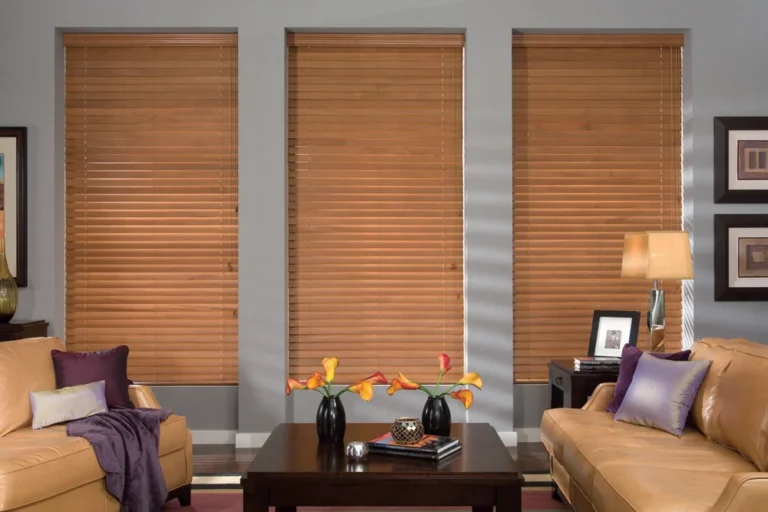
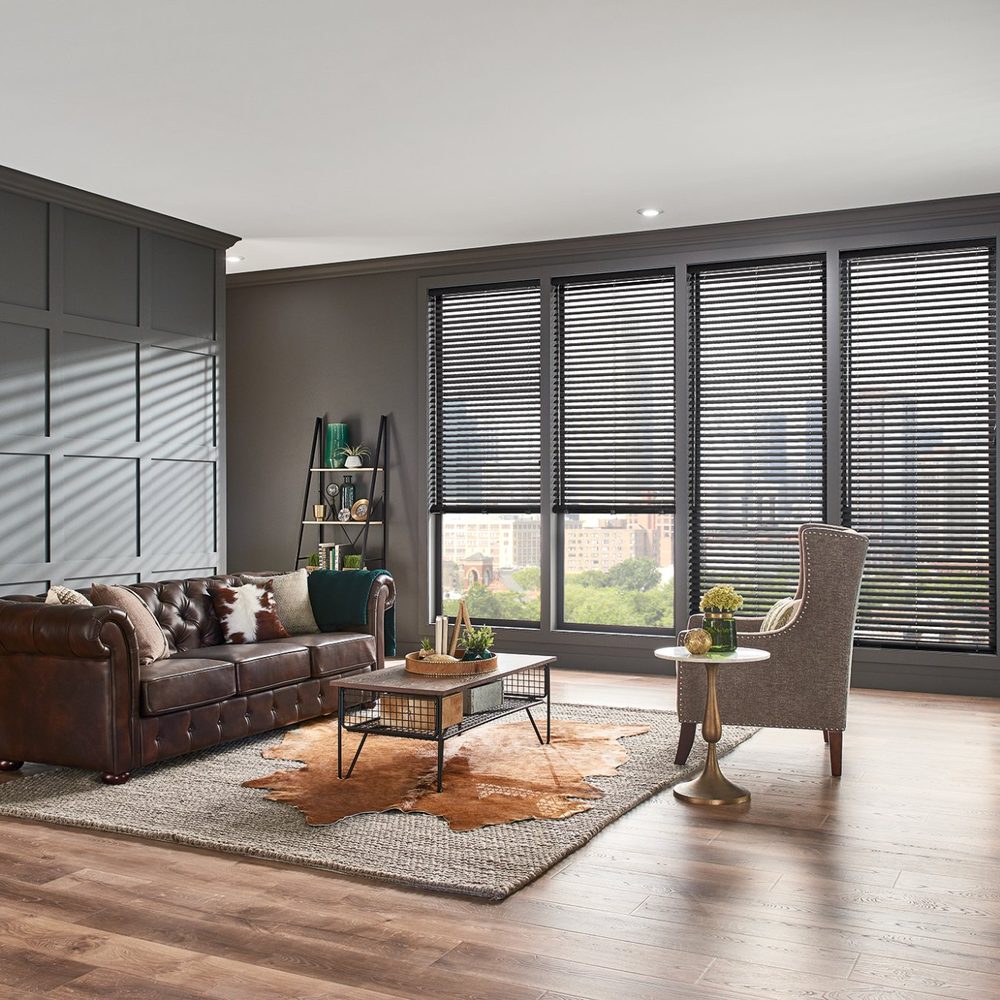
For Heritage Hill homes with Craftsman detailing, including quartersawn oak built-ins, exposed rafter tails, and simple rectilinear trim, real wood blinds in a stained or painted finish reinforce the architectural logic of the room. Colonial Revival interiors with formal symmetry and paneled shutters also pair well with the structured horizontal line of a wood blind. In rooms with higher humidity, such as kitchens or bathrooms, faux-wood blinds provide the same visual character with better moisture resistance. Either option can be custom-cut to your exact window width and height, ensuring a fitted look that generic retail products cannot deliver.
“The window treatment decision in a historic home is really an architectural decision. The wrong product at the wrong scale can undermine decades of careful preservation work. The right one becomes invisible in the best way, letting the house tell its own story.”
– General preservation principle shared widely among historic-home renovation specialists
Comparing Key Options for Heritage Hill Homes
| Treatment Type | Best Architectural Match | Winter Insulation Value | Custom Sizing Required? |
|---|---|---|---|
| Roman Shades | Victorian, Queen Anne | Moderate (with liner) | Yes |
| Cellular Shades | All Heritage Hill styles | High | Yes |
| Real Wood Blinds | Craftsman, Colonial Revival | Moderate | Yes |
| Drapery Panels | Victorian, Queen Anne | Moderate to High | Strongly recommended |
| Faux-Wood Blinds | Craftsman (wet rooms) | Moderate | Yes |
How Much Do Custom Window Treatments Cost in Heritage Hill?
What Drives Pricing for Historic Home Window Coverings
The honest answer is that pricing for custom window treatments in Grand Rapids varies considerably based on window count, product category, fabric or material choice, and operating system (cordless, motorized, or traditional cord). Historic homes in Heritage Hill often have a larger-than-average number of windows, and many of those windows are non-standard sizes, both factors that move the total investment upward compared with a newer build. Drapery panels with custom lining and hardware represent the higher end of the range; cordless cellular shades at a mid-tier fabric level represent a more accessible entry point without sacrificing thermal performance.
How to Think About Value Over Time
For Heritage Hill homeowners, the relevant comparison is not just price per window. It is the cost of a product that fits imprecisely, looks wrong against original millwork, and needs to be replaced within a few years versus a custom-fitted, manufacturer-backed product installed correctly the first time. When your Consumers Energy bill reflects the insulating benefit of well-fitted cellular shades through a full Grand Rapids heating season, the value calculation changes meaningfully. Getting a free in-home measurement and quote is the most reliable way to understand your specific window count, sizes, and product options before committing to a budget.
- Request quotes that include professional measurement, not just product cost
- Ask specifically about inside-mount versus outside-mount depth requirements given your trim profile
- Confirm whether the quote includes hardware, brackets, and basic valances where applicable
- Ask about fabric or slat sample programs so you can evaluate color and texture against your existing woodwork and paint before ordering
- Clarify lead times, as custom-fabricated treatments typically require more production time than retail products
Where Can Heritage Hill Homeowners Get Trusted Local Help?
Why Local Expertise Matters Here Specifically
Heritage Hill, East Hills, and Eastown are not interchangeable with Grand Rapids suburbs when it comes to window treatment installation. The trim profiles, plaster walls, window proportions, and preservation sensibility of these neighborhoods require an installer who understands what they are working with before a single bracket is set. Generic franchise operations and big-box installation services often rely on standard templates that do not translate to a home where the window casings are four inches wide and the plaster is original to 1898. Local knowledge and professional measurement make a concrete difference in the finished result.
Made in the Shade Southeast Grand Rapids
Made in the Shade Southeast Grand Rapids serves homeowners throughout the Grand Rapids metro, including Heritage Hill and the surrounding historic neighborhoods. The team brings professional in-home measurement and a curated selection of manufacturer-backed products to every consultation, with experienced local installers who handle custom sizing and careful mounting as standard practice. Because they work within Grand Rapids neighborhoods every day, they understand the specific challenges these homes present and can help you identify the right product for your window type, your room’s light and heat needs, and your home’s architectural character.
If you are ready to protect your Heritage Hill home through the next Grand Rapids winter while honoring the craftsmanship that makes it worth preserving, the right starting point is a no-obligation in-home consultation. Schedule your free in-home consultation with Made in the Shade Southeast Grand Rapids today, or call (616) 691-6643 to speak directly with a window treatment specialist who knows your neighborhood.
- Professional in-home measurement at no charge
- Custom sizing for non-standard historic window dimensions
- Manufacturer-backed products with professional installation
- Guidance on inside-mount versus outside-mount to protect original millwork
- Service throughout Heritage Hill, East Hills, Eastown, and the broader Grand Rapids metro
Conclusion
Window treatments in a Heritage Hill home are not a finishing touch. They are a functional and preservation decision that affects your comfort through every Grand Rapids winter, your Consumers Energy bills, and the long-term integrity of woodwork and trim that cannot be replaced. The question is not whether you need quality window coverings; it is which products fit your specific windows, your architectural style, and your priorities. Made in the Shade Southeast Grand Rapids is the local resource built for exactly this kind of decision. Call (616) 691-6643 or schedule your free in-home consultation today and get answers tailored to your home, not a generic showroom floor.
Frequently Asked Questions
Can I install inside-mount shades without damaging original woodwork in a Heritage Hill historic home?
Inside-mount installation is possible in many Heritage Hill windows, but it requires careful measurement of the window’s interior depth before any brackets are set. Original plaster returns and thin wood stops inside the frame limit how much clearance is available. A professional measurer will check these dimensions in person and recommend inside-mount only where the depth genuinely accommodates the product’s headrail and hardware, steering you toward an outside-mount option when inside-mount would risk the trim or produce an ill-fitting result.
Are motorized window treatments appropriate for Victorian and Craftsman homes in Heritage Hill?
Motorization is fully compatible with historic interiors because the motor is concealed inside the headrail or roller tube and is not visible from the room. For Heritage Hill homes with tall windows that are difficult to reach, motorized operation adds genuine daily convenience without altering the outward appearance of the treatment. Battery-powered motors avoid the need to run wiring through plaster walls, which is a meaningful advantage in a home where wall integrity matters for preservation purposes.
What is the difference between light-filtering and room-darkening options for bedrooms in older Grand Rapids homes?
Light-filtering fabrics diffuse incoming daylight, softening glare while maintaining a sense of natural brightness in the room. They offer limited privacy after dark when interior lights are on. Room-darkening and blackout liners block substantially more light and provide full nighttime privacy, which matters in Heritage Hill streetfront bedrooms that sit close to sidewalks and neighboring homes. Both options are available within the same Roman shade or cellular shade style, so you do not have to compromise on aesthetics to get the privacy or light control level your specific room requires.
How do I know whether my Heritage Hill home qualifies for any restrictions on window treatment visibility from the street?
The Heritage Hill Historic District has design guidelines administered through the City of Grand Rapids that address exterior character, but interior window treatments generally fall outside the scope of those guidelines since they are not permanent alterations to the structure. That said, it is always worth reviewing your specific property’s status with the Grand Rapids Historic Preservation Commission if you are uncertain, particularly if your home is individually listed or subject to a local landmark designation. Your window treatment provider can discuss product options, but questions about regulatory applicability should go directly to the city’s planning or historic preservation office.