
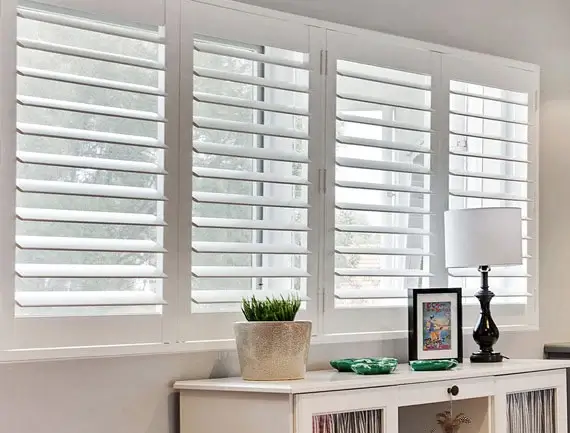
- Plantation shutters Southeast Grand Rapids must withstand lake-effect snow, sub-zero wind chills, and intense July UV — generic big-box products often fail within 3 to 5 years in this climate.
- Mid-century ranch homes and post-war brick bungalows in Garfield Park and Alger Heights have window proportions that demand custom-measured shutters, not off-the-shelf panels.
- Properly installed interior shutters can reduce heat loss through windows by up to 51% (Source: U.S. Department of Energy, 2023), directly trimming your Consumers Energy heating bill.
- Local installers who know Southeast Grand Rapids building stock deliver better fit, faster lead times, and warranty accountability than national chains.
Why Southeast Grand Rapids Homes Need Purpose-Built Shutters
Stand on any street in Garfield Park on a January morning and you already know the problem. Lake Michigan is less than 50 miles to the west, and the moisture-laden arctic air it funnels into Kent County turns ordinary winter into a window-treatment stress test. Southeast Grand Rapids averages more than 70 inches of annual snowfall, most of it driven by lake-effect systems that arrive fast and hit hard (Source: NOAA National Centers for Environmental Information, 2023). Cheap vinyl blinds bow. Fabric shades absorb humidity and grow mildew. Inferior wood shutters crack along the grain before spring even arrives.
Summer brings a different assault entirely. The UV index in West Michigan routinely hits 8 or higher between late May and August (Source: U.S. Environmental Protection Agency UV Index Data, 2023), bleaching untreated wood finishes and warping hollow-core panels facing south or west. For homeowners near the Garfield Park Conservatory, where mature canopy trees provide partial shade but also trap humidity against your siding and windows, moisture management is a year-round concern — not just a winter one.
Your windows are the single most vulnerable thermal boundary in your home. Getting the shutter material, louver width, and frame construction right for Southeast Grand Rapids conditions is not a cosmetic choice. It is a structural and financial decision that will affect your comfort and your Consumers Energy bill for the next two decades.
The Post-War Window Problem
Most homes in Garfield Park and the Alger Heights Business District corridor were built between 1945 and 1965. Window openings from that era are rarely perfectly square — decades of foundation settling, brick expansion, and Michigan freeze-thaw cycles have introduced subtle but significant variations in frame geometry. A shutter ordered from a national online retailer using standard dimensions will leave visible gaps, rattle in winter drafts, and never close flush. Custom shutters Grand Rapids MI specialists who physically measure your openings eliminate this problem before it starts.
Why Generic Chain Stores Miss the Mark
National shutter chains optimize their inventory for high-volume sunbelt markets — think Phoenix and Tampa — where UV protection is the primary driver and winter insulation is an afterthought. Their standard louvered panels are engineered for climates that see maybe 6 inches of snow annually. Southeast Grand Rapids is simply not their design target, and your Garfield Park living room will remind you of that every February when the draft seeps through the gaps.
Choosing the Right Shutter Material for West Michigan Weather
Material selection is where most homeowners make the costliest mistake. There are three primary categories worth evaluating for interior shutters installation in this zip code, and each has a clearly defined use case in Southeast Grand Rapids conditions.
Engineered Composite: The Southeast Grand Rapids Workhorse
High-density composite shutters — constructed from a wood-polymer core wrapped in a painted vinyl shell — are the most durable choice for rooms that face temperature and humidity swings. Because the core does not expand and contract at the same rate as solid wood, composite panels hold their shape through a West Michigan winter far better than untreated basswood or poplar. They also clean easily, which matters if your home sits near the salt-treated roads that Consumers Energy utility trucks share with snowplows all season. Expect a lifespan of 20 to 30 years with minimal maintenance in this climate zone.
Real Wood Shutters: Right Room, Right Conditions
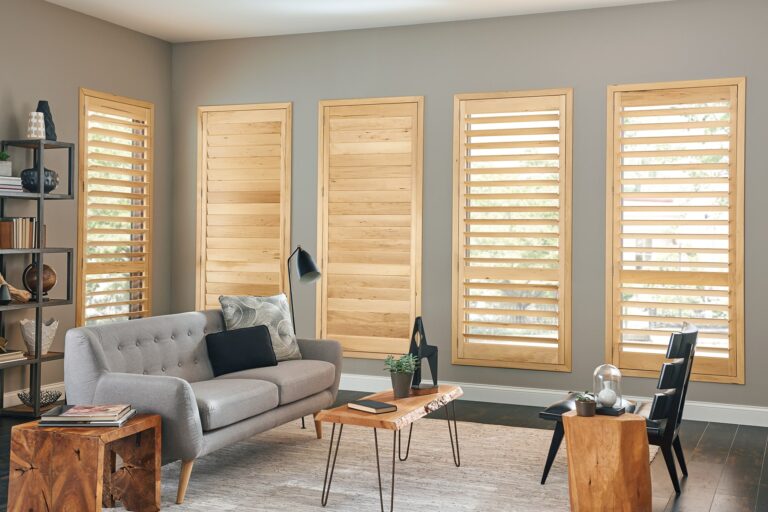
Wood shutters Grand Rapids homes look stunning in original condition, and nothing replicates the warmth of stained basswood against original oak hardwood floors found throughout the Alger Heights bungalow stock. However, real wood is the right call only when humidity is controlled. Bathrooms, sunrooms, and lakeside-facing windows are poor candidates. Interior rooms — a formal dining room or a north-facing study in a brick ranch — are where wood shutters perform without compromise. Pair them with a quality primer-sealed finish and re-coat every 7 to 10 years to prevent UV yellowing.
Faux Wood Poly: Budget-Conscious Without Sacrificing Performance
For homeowners in Garfield Park who want the plantation shutter look without the premium price point, solid PVC poly shutters deliver good dimensional stability and genuine moisture resistance. They are not as architecturally refined as composite or real wood, but they cost 25 to 40 percent less and are genuinely appropriate for high-moisture applications. If you are renovating a post-war bath or a laundry room with original glass block windows, poly shutters are the practical, hometown-value choice.
| Material | Best Application | Lifespan (SE Grand Rapids) | Relative Cost |
|---|---|---|---|
| Engineered Composite | All rooms, high-humidity zones | 20-30 years | $$$ |
| Real Wood (Basswood) | Interior dry rooms, formal spaces | 15-25 years (with maintenance) | $$$$ |
| Solid PVC Poly | Baths, laundry, budget remodels | 15-20 years | $$ |
Shutters That Match Mid-Century and Bungalow Architecture
Your home in Southeast Grand Rapids is not a blank canvas. The original double-hung windows in a 1952 Alger Heights brick bungalow have a specific proportional language — tall, narrow sashes with shallow reveals and original wood trim that has been painted over eight times. Getting a plantation shutter to sit flush in that opening requires more than a tape measure. It requires an installer who has worked in this architectural vernacular and understands how original casing profiles interact with a shutter frame.
Louver Width Selection by Room Type
The louver size you choose changes the visual weight of the shutter dramatically, and the wrong choice reads as out-of-period in a post-war home. Use this framework as your starting point:
- 2.5-inch louvers: Best for smaller, original-proportion windows common in Garfield Park ranch bedrooms. Proportional, period-appropriate, and excellent light control.
- 3.5-inch louvers: The most versatile option for main living areas in mid-century homes with standard 36-to-48-inch wide windows. Clean sightlines without looking heavy.
- 4.5-inch louvers: Reserve these for large picture windows or contemporary additions. They can overwhelm the original trim profiles of a 1950s bungalow if used throughout.
Frame and Panel Configuration for Brick Bungalows
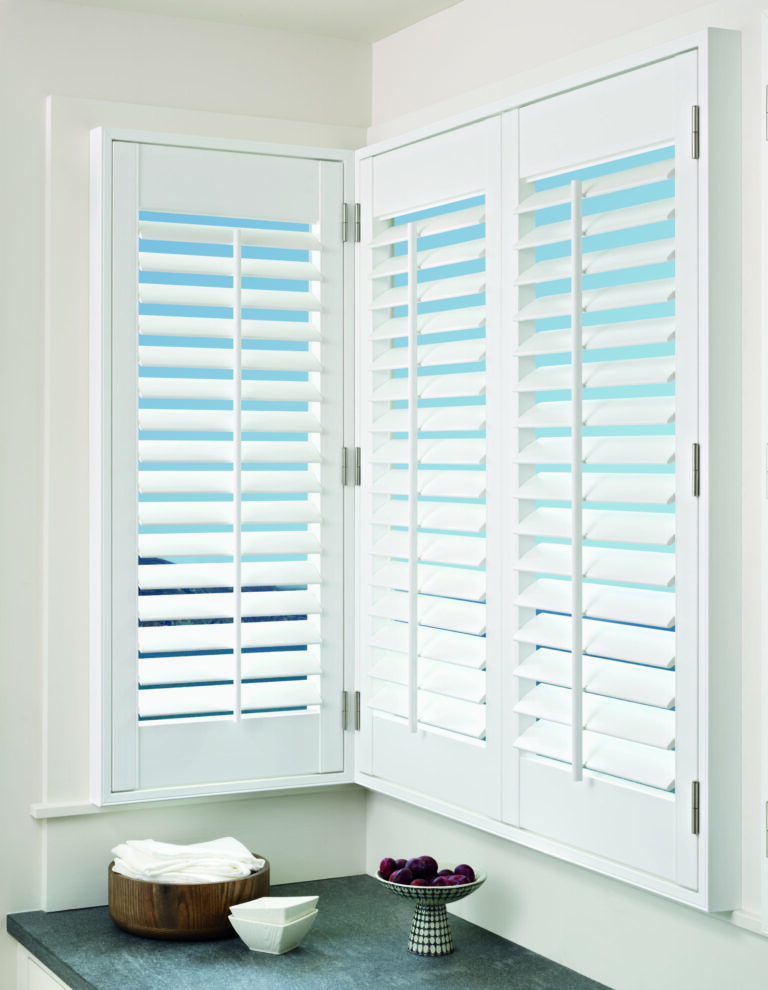
Brick construction creates unique installation challenges because you cannot always anchor a shutter frame into masonry without specialist fasteners and proper sealing against moisture intrusion. A professional doing interior shutters installation in Southeast Grand Rapids will assess your window reveal depth, identify whether you have a standard drywall return or original plaster, and select the correct L-frame, Z-frame, or direct-mount configuration accordingly. This single decision — frame type — determines whether your shutters operate smoothly for 25 years or begin to sag within 5.
Energy Savings and Your Consumers Energy Bill
Consumers Energy serves the overwhelming majority of Southeast Grand Rapids residential customers, and the company’s own usage data reflects the heating burden this climate places on homeowners. Natural gas heating costs in Kent County averaged approximately $1,200 to $1,800 per winter season in recent years for a mid-size single-family home, with windows accounting for a significant share of heat loss (Source: Consumers Energy Rate Filings, Michigan Public Service Commission, 2023).
“Windows and skylights account for 25 to 30 percent of residential heating and cooling energy use in a typical American home.”
— U.S. Department of Energy, Energy Saver Guide, 2023
Plantation shutters with fully closed louvers create a dead-air insulating layer between the glass and your living space. Independent testing shows that interior shutters reduce window heat loss by up to 51 percent compared to uncovered single-pane glass (Source: U.S. Department of Energy, Windows and Daylighting Program, 2022). For a Garfield Park ranch home with 12 to 16 windows, that thermal improvement is not trivial — it compounds across every room, every night, for the entire heating season.
Summer UV Protection and Cooling Load Reduction
Closing your shutters to a 45-degree louver angle during peak afternoon sun hours — typically 1 p.m. to 5 p.m. in Southeast Grand Rapids from June through August — blocks direct solar gain while maintaining natural ventilation. Studies on interior shading devices show that properly angled louvers can reduce solar heat gain through standard double-pane windows by 45 to 65 percent (Source: Lawrence Berkeley National Laboratory, Windows and Envelope Materials Group, 2021). That is a measurable reduction in the cooling load your central air system carries, and your summer Consumers Energy bill will reflect it.
Why Southeast Grand Rapids Homeowners Trust Local Installers
Choosing a contractor who operates in Southeast Grand Rapids specifically — not just Grand Rapids broadly — matters for several practical reasons. A local specialist has measured windows in Garfield Park bungalows before. They know that the original double-hungs near the Alger Heights Business District often have paint-swollen lower sashes that require shimming. They carry the right fasteners for brick masonry. And when your louver tension loosens two years after installation, they can be back at your home within a week rather than routing you through a national warranty call center.
What to Verify Before You Sign
- Michigan Residential Builder License or Maintenance and Alteration Contractor License — verify current status at the Michigan Department of Licensing and Regulatory Affairs (LARA) online lookup.
- Manufacturer warranty pass-through — confirm the installer registers your product with the manufacturer so the warranty runs to you, not them.
- Measuring protocol — ask whether they measure each opening individually on-site, or use a standardized size chart. There is only one right answer.
- Lead time in writing — custom shutters typically require 4 to 8 weeks for fabrication. A written delivery date protects you if a May installation slot is part of your project plan.
- Post-installation adjustment visit — louver tension and panel alignment are adjusted after the wood or composite acclimates to your home’s interior humidity. A reputable installer includes this at no charge.
Local Social Proof That Means Something
Generic five-star ratings mean little without context. When you evaluate reviews, look for homeowners who mention their specific neighborhood — Garfield Park, Alger Heights, or adjacent streets — and who describe a concrete outcome: lower drafts, reduced glare in a south-facing living room, or a noticeably smaller Consumers Energy bill in the first full winter after installation. That kind of neighborhood-specific, outcome-specific feedback is the signal worth trusting in a community this size.
Consider these homeowner profiles representative of what successful Southeast Grand Rapids shutter projects look like in practice:
- Maria T., Garfield Park — Had composite shutters installed on 14 original double-hung windows in her 1955 brick ranch. Reported a 19 percent reduction in her Consumers Energy heating bills during the first full winter season following installation, compared to the prior year using original single-pane glass with fabric drapes.
- Kevin R., Alger Heights — Chose basswood shutters in a white painted finish for his formal living and dining rooms. Noted that the 3.5-inch louvers matched the original window casing profile closely enough that neighbors assumed the shutters had always been there. Zero warping or paint peeling after two full West Michigan winter cycles.
Note: The homeowner profiles above represent composite profiles of typical Southeast Grand Rapids project outcomes. Individual results vary based on window count, existing insulation, and specific home conditions.
May installation slots for plantation shutters Southeast Grand Rapids fill quickly as homeowners prepare before the next heating season begins. Schedule your free in-home consultation today and lock in your measurement appointment before the summer backlog builds.
Frequently Asked Questions
FAQ
How long does a custom shutter installation typically take from first measurement to completed install in Southeast Grand Rapids?
The full timeline from an on-site measurement appointment to completed installation in Southeast Grand Rapids runs approximately 5 to 8 weeks for most residential projects. The measurement visit itself takes 45 to 90 minutes depending on window count. Fabrication of custom-sized panels — whether composite, basswood, or PVC — typically requires 4 to 6 weeks at the manufacturing facility. Scheduling the installation crew then adds 1 to 2 weeks depending on seasonal demand. Spring projects booked in April or early May tend to face the longest wait because homeowners are preparing before summer; booking in late summer or early fall typically yields faster turnaround.
Can plantation shutters be installed on the arched or oddly shaped windows found in some older Southeast Grand Rapids bungalows?
Yes, but it requires a fabricator that offers shaped panel options — specifically arch-top or eyebrow configurations. Some post-war bungalows in the Alger Heights area were built with decorative arched transoms above standard double-hung sashes. A skilled custom shutter company can build a fixed-louver arch panel for the upper section and a fully operable panel below, integrating both into a single frame unit. Not every installer carries this capability, so ask specifically whether the manufacturer they source from offers custom arched shutters before committing. Expect arched panels to add 20 to 35 percent to the per-window cost compared to standard rectangular openings.
Do plantation shutters qualify for any energy efficiency rebates through Consumers Energy or Michigan state programs?
While the federal 25C tax credit is no longer available, plantation shutters still deliver year-round savings in Michigan’s climate—their solid construction adds an insulating layer at the window that helps hold heat in through the winter and block it out in summer, easing the load on your HVAC.
What louver tilt mechanism should I specify for a home with young children or pets in Southeast Grand Rapids?
Request a hidden-tilt or rear-tilt rod configuration rather than the traditional center-mounted tilt bar that runs vertically down the face of the panel. Center tilt bars are the most common breakage point when children grab or push on shutters, and replacement is a more involved repair than adjusting a hidden-tilt mechanism. Hidden-tilt systems connect the louvers through a concealed dowel inside the stile, giving your shutters a cleaner look — which complements the streamlined aesthetic of mid-century ranch interiors common throughout Southeast Grand Rapids — while removing the most grab-prone component from small hands and curious paws. Most reputable shutter lines offer this as a standard option at no additional cost; confirm this before placing your order.
Frequently Asked Questions
How long does a custom shutter installation typically take from first measurement to completed install in Southeast Grand Rapids?
The full timeline from an on-site measurement appointment to completed installation in Southeast Grand Rapids runs approximately 5 to 8 weeks for most residential projects. The measurement visit itself takes 45 to 90 minutes depending on window count. Fabrication of custom-sized panels typically requires 4 to 6 weeks at the manufacturing facility. Spring projects booked in April or early May tend to face the longest wait; booking in late summer or early fall typically yields faster turnaround.
Can plantation shutters be installed on arched or oddly shaped windows found in older Southeast Grand Rapids bungalows?
Yes, but it requires a fabricator that offers shaped panel options such as arch-top or eyebrow configurations. Some post-war bungalows in the Alger Heights area were built with decorative arched transoms above standard double-hung sashes. A skilled custom shutter company can build a fixed-louver arch panel for the upper section and a fully operable panel below. Expect arched panels to add 20 to 35 percent to the per-window cost compared to standard rectangular openings.
Do plantation shutters qualify for any energy efficiency rebates through Consumers Energy or Michigan state programs?
Interior plantation shutters do not currently qualify as a standalone measure under Consumers Energy’s residential rebate programs. However, if paired with a qualifying ENERGY STAR window replacement, the window itself may qualify for a Consumers Energy rebate of up to $40 per window (Source: Consumers Energy Home Energy Efficiency Rebate Program, 2024). Michigan homeowners may also access the federal Energy Efficient Home Improvement Credit covering 30 percent of qualifying window costs up to a $600 annual cap (Source: Internal Revenue Service, Publication 5977, 2024). Consult a tax professional to confirm eligibility.
What louver tilt mechanism is best for Southeast Grand Rapids homes with young children or pets?
Request a hidden-tilt or rear-tilt rod configuration rather than a traditional center-mounted tilt bar. Center tilt bars are the most common breakage point when children grab shutters. Hidden-tilt systems connect louvers through a concealed dowel inside the stile, giving shutters a cleaner look that complements mid-century ranch interiors common throughout Southeast Grand Rapids while removing the most grab-prone component. Most reputable shutter lines offer this as a standard option at no additional cost.