
Here is a misconception that circulates constantly among Southeast Grand Rapids homeowners: if a window is small, any inexpensive blind from a home-improvement store will do the job. Walk through the original Craftsman bungalows near the Alger Heights Business District or the mid-century ranches tucked into Garfield Park and you will quickly see why that assumption causes real problems. Small window blinds in Southeast Grand Rapids are not a minor afterthought; they are a thermal and aesthetic decision that shapes how comfortable your home feels every Michigan winter.
This article is for homeowners in Southeast Grand Rapids, specifically in neighborhoods like Alger Heights and Garfield Park, who are dealing with narrow casement windows, transom openings, or the compact double-hungs common to both Craftsman bungalow and mid-century ranch architecture. By the end, you will know exactly what to look for, what to avoid, and how Made in the Shade Southeast Grand Rapids can help you get it right the first time.
Key Takeaways
- Standard retail blinds are sized for modern windows and rarely fit historic Craftsman casements or narrow ranch sidelights without costly cutting or awkward gaps.
- Improperly fitted small-window coverings are a leading source of winter drafts in older Southeast Grand Rapids homes, putting unnecessary pressure on your Consumers Energy heating costs.
- Custom-measured coverings in cellular or roller formats seal the frame tightly, insulate more effectively, and look proportionally correct on smaller windows.
- Made in the Shade Southeast Grand Rapids offers professional in-home measurement and can deliver a quote within 24 hours.
The Myth That Any Blind Will Do
Many homeowners assume that buying a blind listed as a certain width at a big-box store is essentially the same as ordering custom. It is not, and the gap between those two things matters most on small windows. Retail blinds are manufactured to standard widths designed around post-1980 construction norms. The original casement and transom windows in Craftsman bungalows throughout Alger Heights were built to entirely different proportions, often narrower and taller than anything on a retail shelf today.
The result is a covering that either overhangs the frame and blocks trim detail or leaves a visible gap at the edge where cold air can pass through freely. Neither outcome is acceptable when Michigan winters regularly push temperatures into the single digits and your Consumers Energy bill reflects every degree of heat that escapes.
Why “Close Enough” Fails in Cold Climates
A gap of even a quarter inch around a small window covering is proportionally much larger than the same gap on a 48-inch-wide window. On a 12-inch-wide casement, that gap represents a significant percentage of the total frame perimeter. Cold air infiltration concentrates around window edges, so an ill-fitting blind actually channels drafts rather than blocking them. If your home sits on a street in Garfield Park where mature trees create wind tunnels in January, you will feel this immediately.
The Trim Detail Problem Craftsman Homes Face
Craftsman bungalows in Southeast Grand Rapids were built with wide, proud window casings as a deliberate design feature. An oversized retail blind mounted outside the frame will cover or clash with that original woodwork. A properly fitted inside-mount covering, cut to the exact interior dimensions of your window, preserves the character of your home without sacrificing function.
What Actually Works for Narrow and Transom Windows
The practical solution for compact window treatments in Grand Rapids homes is a custom-measured product, full stop. But within that category, you have meaningful choices, and each one performs differently depending on what your window needs to do.
Cellular Shades: The Thermal Workhorse
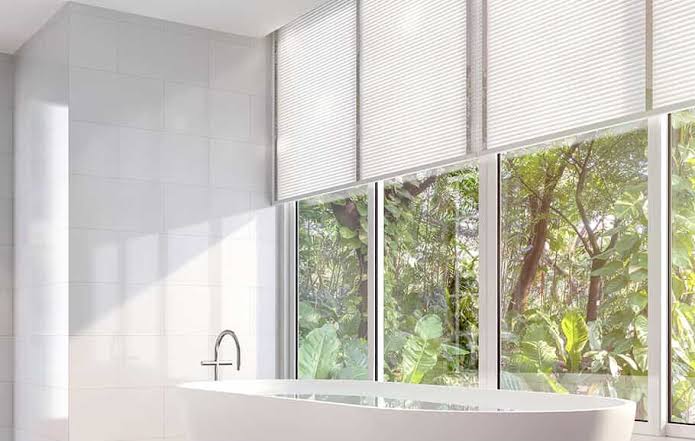
Cellular shades (sometimes called honeycomb shades) trap air in small pockets within the fabric, creating a layer of insulation between the glass and your living space. For the narrow casement windows that appear throughout Alger Heights bungalows, a single-cell or double-cell cellular shade cut to the exact interior width is one of the most practical choices available. The U.S. Department of Energy notes that interior window coverings can meaningfully reduce heat loss in winter, and cellular shades are consistently among the most effective interior options. Because your window opening is small, the material cost is lower than you might expect, while the thermal benefit remains proportional to the glass area it covers.
Roller Shades: Clean Lines for Ranch Architecture
Mid-century ranch homes in Garfield Park often feature horizontal banding, low rooflines, and a design language that favors clean, uncluttered surfaces. A slim-profile roller shade in a solar or light-filtering fabric complements that aesthetic without adding visual weight. Custom-width roller shades for narrow windows can be ordered to tolerances tight enough to achieve a true inside mount, maintaining the flat, modern appearance that suits a ranch’s horizontal character.
When a Woven Wood or Faux Wood Works
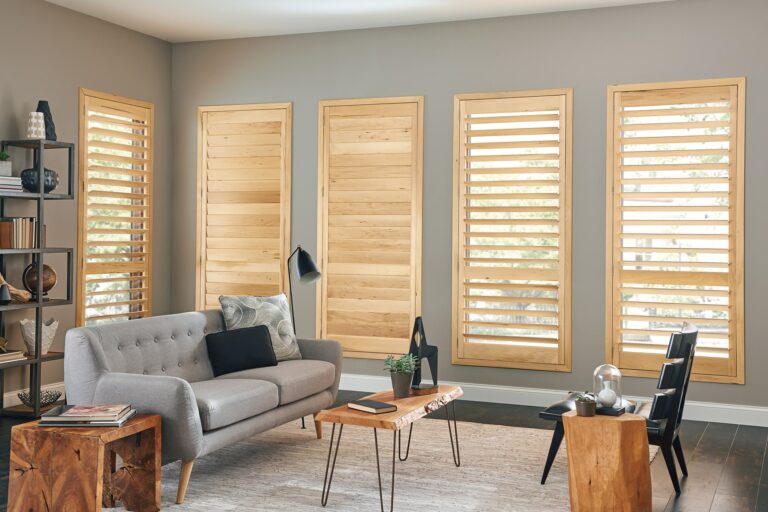
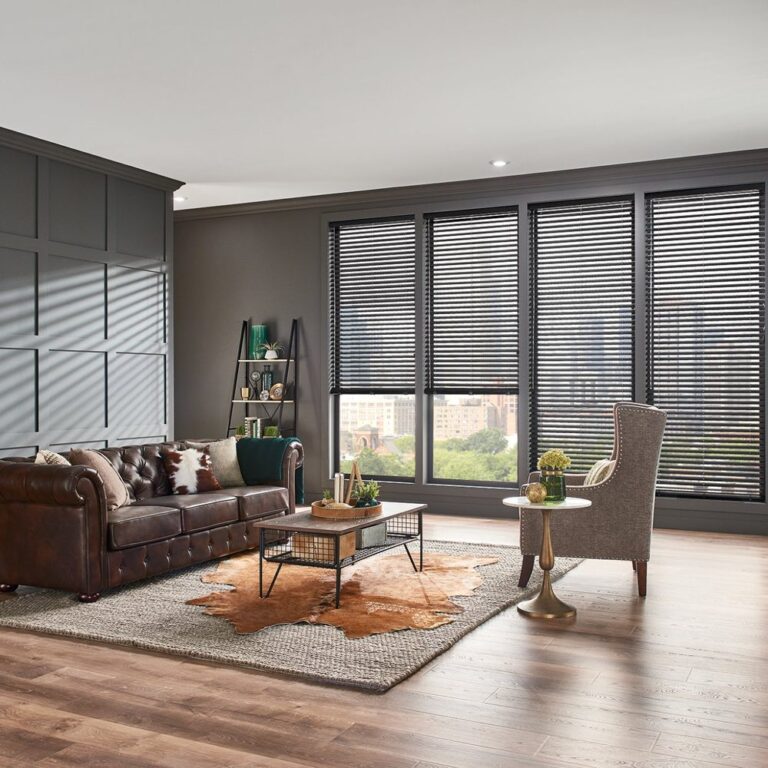
For homeowners who want warmth of texture alongside thermal performance, woven wood shades or faux-wood blinds sized to small windows add organic character that feels appropriate to a Craftsman interior. Faux wood holds up particularly well near windows that collect condensation in winter, which is a real concern in older Southeast Grand Rapids homes where single-pane glazing is still common.
“The right covering for a small window is not just about light control. It is about sealing a gap in your home’s thermal envelope, preserving your original architecture, and choosing a product whose proportions actually match the opening.”
Thermal Comfort, Consumers Energy Bills, and Your Windows
Homeowners in Southeast Grand Rapids served by Consumers Energy are likely already familiar with how quickly heating costs climb during a Michigan winter. Windows are among the most significant points of heat exchange in any home, and small windows are not exempt simply because of their size. In fact, an older home with six or eight original narrow casements, each fitted with a loose or uninsulating covering, can represent meaningful cumulative heat loss across a full heating season.
Properly fitted cellular or insulating roller shades on those windows act as a supplemental barrier between your conditioned air and the cold glass surface. This does not replace weatherstripping or proper glazing, but it adds a practical layer that works alongside those other improvements. If you have already had Consumers Energy perform an energy audit on your home and been advised to address window performance, custom small-window coverings are a logical and relatively accessible next step.
What to Measure Before You Call
Before reaching out for a quote, it helps to know the difference between your rough opening and your finished opening. For an inside mount on a small casement or transom, you need the interior width and height of the frame at three points each (top, middle, and bottom for width; left, center, and right for height), because older Craftsman window frames are rarely perfectly square. That said, Made in the Shade Southeast Grand Rapids will send a professional to take these measurements for you, so if the numbers feel daunting, you do not need to do it alone.
Choosing the Right Covering for Your Home’s Style
To help you think through your options before your consultation, here is a comparison of the most practical choices for the window types common in Southeast Grand Rapids.
| Covering Type | Best For | Thermal Benefit | Style Match |
|---|---|---|---|
| Cellular (Honeycomb) Shade | Narrow casements, drafty original windows | High (air pockets insulate) | Craftsman bungalow |
| Solar Roller Shade | South-facing or glare-prone windows | Moderate (reduces solar gain) | Mid-century ranch |
| Faux Wood Blind | Moisture-prone rooms, condensation windows | Low to moderate | Both styles |
| Woven Wood Shade | Living spaces, light diffusion priority | Low (texture over insulation) | Craftsman bungalow |
Your final choice will depend on the room, the window’s orientation, your privacy needs, and your budget. Because small windows cost less in material per unit, many homeowners in Alger Heights and Garfield Park find they can step up to a higher-performance or higher-aesthetic option without a significant increase in total project cost compared to covering a standard-size window.
Questions to Ask Before You Commit
- Is this window single-pane or double-pane? (Single-pane benefits more from an insulating cellular shade.)
- Do I need a cord-free lift for windows near seating or in a child’s room?
- Is the frame square? (If not, inside mounting requires a professional measurement.)
- Do I want to match other window coverings already in the home?
- Is light-filtering or room-darkening fabric the right choice for this room’s use?
Getting Your Custom Measurement and Quote
Made in the Shade Southeast Grand Rapids serves homeowners throughout the southeast side of Grand Rapids, including Alger Heights, Garfield Park, and the surrounding neighborhoods. The process begins with a free in-home consultation where a professional measures every window you want to cover, discusses fabric and style options in the context of your actual space, and provides a detailed quote typically within 24 hours.
This matters because custom blinds for small windows in Grand Rapids are not a product you should order based on a tape-measure estimate taken in poor light. Craftsman and ranch window frames from this region’s mid-century housing stock are often out of square by enough to affect fit. Getting it right the first time saves you the cost and frustration of a remake.
Manufacturer-backed warranties apply to the products Made in the Shade Southeast Grand Rapids installs, and professional measurement is included in the consultation at no charge. If you are ready to stop guessing and start with a covering that actually fits your windows, the next step is straightforward.
Call (616) 691-6643 or reach out online to schedule your free in-home measurement. You will have a quote in hand within 24 hours and a clear path to windows that work with your home, not against it.
- Schedule your free in-home measurement with Made in the Shade Southeast Grand Rapids.
- Receive your custom quote within 24 hours.
- Select your fabric, lift style, and mount type with guidance from a local professional.
- Have your coverings installed correctly, the first time.
Frequently Asked Questions
How much do custom small window blinds cost in Southeast Grand Rapids compared to retail options?
Custom small-window coverings in Southeast Grand Rapids typically cost more per unit than retail blinds, but because smaller windows require less material, the price difference is often narrower than homeowners expect. A retail blind that fits poorly, allows drafts, or requires replacement within a few years is not genuinely economical. A professionally measured custom covering backed by a manufacturer warranty is built for the specific frame it occupies and is designed to last. Contact Made in the Shade Southeast Grand Rapids at (616) 691-6643 for a no-cost quote tailored to your windows.
Can I use the same covering type on a transom window and the main window beneath it in a Craftsman bungalow?
Matching covering types on a transom and its primary window below is possible but not always the most functional approach. Transom windows in Craftsman bungalows were typically designed to deliver diffused overhead light independently from the main opening. Using a light-filtering shade on the transom and a room-darkening option on the primary window lets you control each function separately. A professional in-home consultation helps you evaluate each opening individually before you commit to a single product across all windows.
Are cordless or motorized lift options available for very narrow windows in older Southeast Grand Rapids homes?
Yes. Cordless and motorized lift systems are available in custom widths narrow enough to fit the original casement windows found throughout Southeast Grand Rapids neighborhoods like Alger Heights and Garfield Park. Cordless cellular and roller shades are especially practical in tight openings where a corded mechanism can feel awkward. Motorized options work well for hard-to-reach transoms, eliminating the need to reach over furniture each time you adjust the shade.
Do window coverings on small windows actually make a noticeable difference on a Consumers Energy bill in winter?
The impact depends on how many small windows your home has and whether they are single-pane or double-pane. For Southeast Grand Rapids homes with original single-pane casements throughout, adding well-fitted cellular shades to multiple windows can reduce perceptible drafts and allow you to lower your thermostat setpoint. The cumulative effect across six to ten small openings can be meaningful. Window coverings work best as one layer of a broader weatherization approach, alongside proper weatherstripping and glazing, rather than as a standalone solution.