Key Takeaways
- The best energy efficient window treatments in Grand Rapids for most post-war Colonial Revival and split-level homes are cellular (honeycomb) shades — they trap the most air and directly address lake-effect cold-snap heat loss.
- Consumers Energy offers energy-efficiency incentive programs for qualifying home improvements; window treatments may be eligible depending on current program terms — always verify directly with Consumers Energy.
- Your biggest heat-loss culprit is almost always a large, single-pane legacy window — the kind common across Westside Grand Rapids and Kentwood neighborhoods.
- Made in the Shade Southeast Grand Rapids provides professional in-home measurement and free consultations. Call (616) 691-6643 to get started.
How to Decide: The Grand Rapids Window Treatment Framework
If you have opened your Consumers Energy bill after a January cold snap in Grand Rapids and felt your stomach drop, you already know the problem. From December through February, sustained sub-freezing temperatures — amplified by lake-effect wind off Lake Michigan — push heating costs well above Michigan state averages, and a significant share of that lost heat escapes through your windows. Before you call anyone, you need a decision framework built around your home, not a generic national guide.
Ask yourself three questions. First: what is your home’s window age and style? The large, single-pane windows common in post-war Colonial Revival and split-level homes across Westside Grand Rapids and Kentwood neighborhoods lose heat at a dramatically higher rate than modern double-pane units. Second: what is your primary goal — maximum insulation, light control, or a balance of both? Third: are you willing to invest upfront for long-term bill savings, or do you need the lowest possible entry cost today? Your answers will determine which product family makes the most sense, and the comparison below is organized exactly around those trade-offs.
Your Options, Trade-Offs, and Real-World Performance
There are four product families worth seriously considering for a Grand Rapids home. Each has a distinct performance profile, a different aesthetic fit with West Michigan architectural styles, and a different price band. Here is an honest look at each one.
Cellular (Honeycomb) Shades
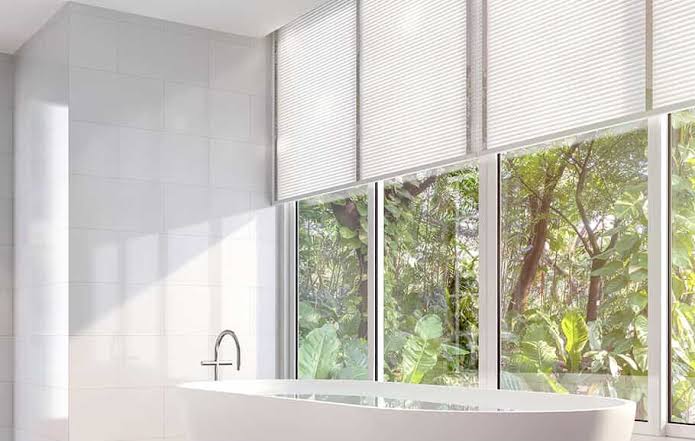
Cellular shades are the workhorse solution for insulating window coverings in Grand Rapids. Their hollow honeycomb cells trap a layer of still air between the glass and your living space, creating a buffer against the cold that simple blinds cannot match. Double-cell and triple-cell configurations add more air pockets, improving thermal performance further — a meaningful difference when temperatures outside Van Andel Arena drop into the single digits during a February storm.
For the large picture windows typical of split-level homes in Kentwood, a top-down/bottom-up cellular shade lets you keep privacy at eye level while allowing natural light through the upper portion. This dual function makes them the most versatile pick for West Michigan’s short winter days, when every lumen of natural light matters. The trade-off: quality cellular shades carry a higher upfront cost than basic roller shades or aluminum blinds.
Roman Shades with Insulating Liners
If your home leans toward the Colonial Revival aesthetic common in older Westside Grand Rapids neighborhoods, Roman shades with a blackout or thermal liner deliver both the warm, tailored look and meaningful cold-air resistance. The liner adds a layer of dense fabric that slows radiant heat loss and reduces drafts around the window frame. They look intentional and custom in rooms with traditional trim profiles and wood floors — hallmarks of mid-century Grand Rapids residential construction.
The trade-off here is cleaning and longevity. Fabric-heavy Roman shades require more maintenance than hard treatments, and the liner can degrade over time if exposed to excessive condensation — something to keep in mind during Grand Rapids’ high-humidity shoulder seasons.
Exterior Solar Shades and Interior Solar Roller Shades
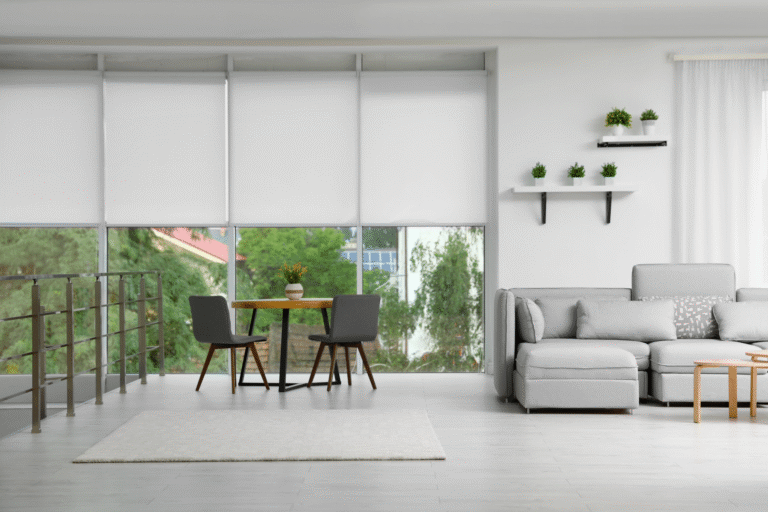
Solar shades are primarily a summer heat-gain tool: they block solar radiation before or just after it passes through the glass. In a city where winters are the dominant energy concern, solar shades are most useful as a complementary layer rather than a primary insulation strategy. That said, if your split-level home has south- or west-facing windows that overheat in July — even within sight of Riverside Park’s open sky — a solar shade on those exposures can reduce cooling loads and even out your Consumers Energy bills year-round.
Interior solar roller shades are lower cost, easier to clean, and available in a wide range of openness factors. They are a reasonable add-on to cellular shades in a layered window treatment strategy.
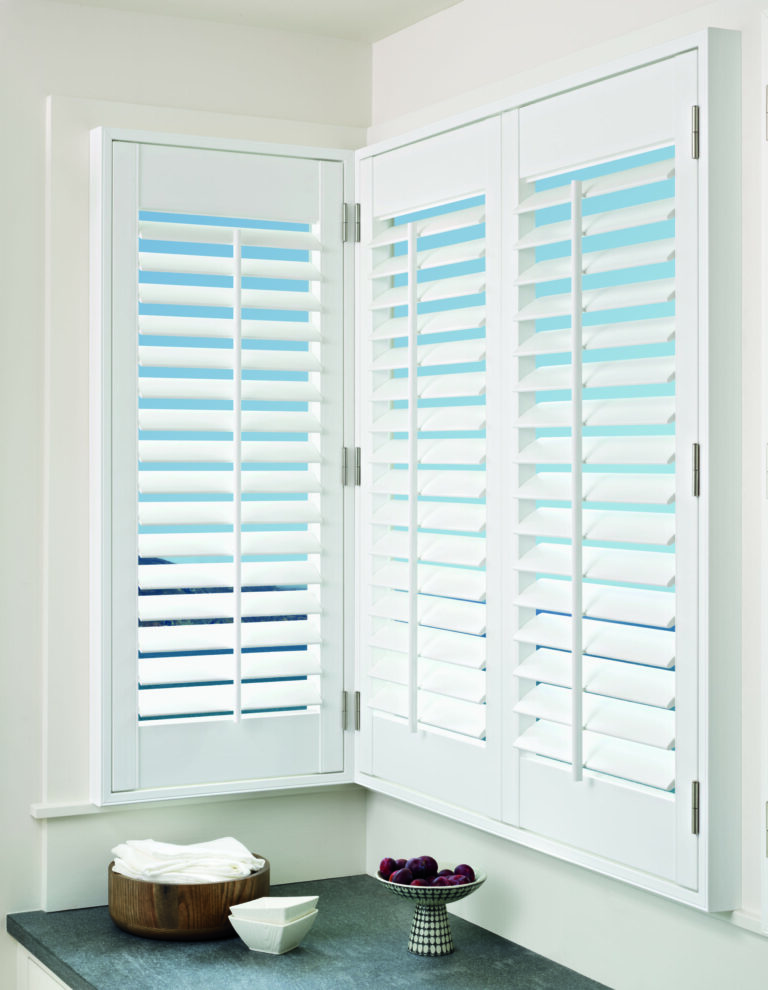
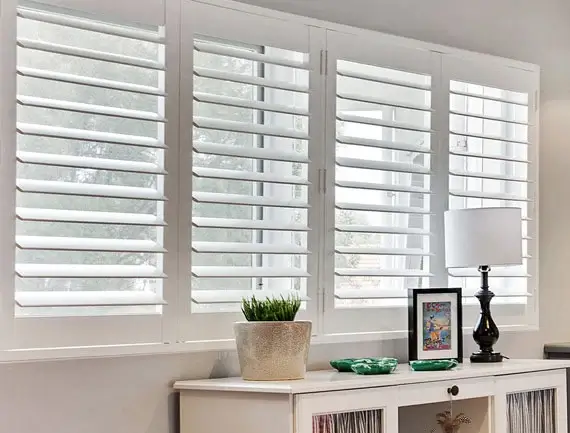
Plantation Shutters
Plantation shutters are the premium, permanent option. Solid-panel shutters provide genuine structural insulation when fully closed, and they complement the wide window casings common in Colonial Revival architecture. They also add perceived value at resale — a real consideration in competitive Grand Rapids suburban markets. However, they are the highest-cost option by a significant margin, require professional installation, and are not easily changed if your design preferences shift. For most budget-conscious Grand Rapids homeowners focused on heat-reducing blinds and coverings as a practical bill-lowering measure, shutters are a long-term aspiration rather than an immediate solution.
Side-by-Side Comparison: Which Fits Your Grand Rapids Home?
Use this table to match your priorities to the right product. Note that “insulation value” here is a qualitative comparison — actual performance depends on specific product specifications, window size, and installation quality.
| Treatment Type | Insulation Value | Best For | Architectural Fit (GR) | Relative Cost |
|---|---|---|---|---|
| Cellular Shades (double/triple cell) | High | Primary winter insulation | Split-level, Colonial Revival | Moderate–High |
| Roman Shades with Thermal Liner | Moderate–High | Aesthetic warmth + insulation | Colonial Revival, traditional trim | Moderate |
| Solar Roller Shades | Low (winter); Moderate (summer) | Glare/heat control in warm months | Modern, contemporary | Low–Moderate |
| Plantation Shutters | High (closed) | Long-term investment, resale value | Colonial Revival, formal rooms | High |
“In Grand Rapids, your windows are your home’s weakest thermal link from Thanksgiving through St. Patrick’s Day. Every dollar you invest in covering them properly is a dollar that stops going to Consumers Energy.”
Consumers Energy Incentives: What Grand Rapids Homeowners Should Know
Consumers Energy, the primary utility serving most of the Grand Rapids metro, periodically offers energy-efficiency rebate and incentive programs for residential customers. These programs have included measures related to home insulation and thermal performance improvements. Whether a specific window treatment product qualifies under current program terms is something you must verify directly with Consumers Energy, as program eligibility, funding levels, and qualifying product categories change regularly.
How to Check Your Eligibility
Start by logging into your Consumers Energy account online and navigating to the efficiency programs section, or call their energy efficiency line directly. When you inquire, ask specifically whether insulating window coverings such as cellular shades are listed as qualifying measures under any current residential rebate program. Programs like these are often time-limited and funded in annual cycles, so checking in October or November — before peak heating season — puts you ahead of the curve.
- Have your Consumers Energy account number ready when you call.
- Ask for documentation on what product certifications or specifications are required for any rebate.
- Get any rebate confirmation in writing before you purchase, so your investment is protected.
If you are unsure where to start, Made in the Shade Southeast Grand Rapids can walk you through the questions to ask your utility during your free consultation. They are familiar with what West Michigan homeowners typically encounter when navigating efficiency programs and can help you ask the right questions.
Pairing Incentives with the Right Product
If Consumers Energy does recognize a specific product category for an incentive, cellular shades from established manufacturers are most commonly associated with documented energy performance metrics. Their tested, rated construction makes it easier to supply any documentation a utility program might request. When you are shopping for energy efficient window treatments in Grand Rapids specifically to qualify for a utility incentive, ask your supplier for manufacturer specification sheets — not just marketing brochures.
The Best Choice for Most Grand Rapids Homes: A Clear Verdict
After weighing the options against the realities of West Michigan winters, the dominant local architecture, and the Hometown Value priorities of most Grand Rapids families, the verdict is straightforward: double-cell or triple-cell cellular shades are the single best investment for the majority of Grand Rapids homes. They deliver the highest insulation performance per dollar spent, fit naturally into the wide, multi-paned windows of Westside Grand Rapids and Kentwood split-levels, and are the product type most likely to align with utility efficiency program requirements if your home qualifies.
If your budget allows and you have formal living spaces with traditional Colonial Revival trim, layer Roman shades with a thermal liner over your cellular shades in those rooms. For south-facing or west-facing windows that bake in summer, add a solar roller shade as a second layer. That tiered approach — cellular shades as the foundation, specialty treatments where the architecture and sun exposure call for them — is the strategy that experienced local installers consistently recommend for Grand Rapids homes.
Your next step is straightforward. Made in the Shade Southeast Grand Rapids provides professional in-home measurement so that your window treatments fit precisely — no gaps, no drafts, no guesswork. Proper fit is the difference between a treatment that actually cuts your Consumers Energy bill and one that just looks nice while cold air still seeps through the edges.
- Get a precise in-home measurement from a professional — not a self-measure estimate.
- Ask about manufacturer-backed warranties on all products you consider.
- Confirm Consumers Energy incentive eligibility before finalizing your product selection.
- Prioritize coverage for your largest windows first — typically the living room and dining room in Colonial Revival and split-level floor plans.
Ready to stop guessing and start saving? Find out which window treatments qualify for Consumers Energy efficiency incentives and get a free energy audit consultation from Made in the Shade Southeast Grand Rapids. Call (616) 691-6643 today or schedule your visit online — before the next cold snap hits Grand Rapids and your heating bill climbs again.
Frequently Asked Questions
Do window treatments actually make a measurable difference on a Consumers Energy heating bill in Grand Rapids?
Yes, though the exact dollar impact depends on your specific windows, home size, and current bill. The key mechanism is simple: uncovered single-pane windows — the type common in older Grand Rapids neighborhoods like Westside and Kentwood — allow significant convective heat loss. A well-fitted cellular shade creates a sealed air buffer at the glass surface, reducing the rate at which interior heat escapes. Over a full December-through-February heating season, that thermal resistance on multiple windows adds up. The improvement is most pronounced in homes that still have original single-pane windows from the post-war construction era.
Is there a specific time of year to contact Consumers Energy about window treatment rebate programs?
Efficiency incentive programs are typically funded on an annual cycle and can be fully subscribed — meaning the available funding runs out — before the year ends. Contacting Consumers Energy in the fall, ideally before peak heating season begins in late November, gives you the best chance of finding active program funding and enough lead time to purchase and install qualifying treatments before winter. Waiting until January, when demand for efficiency programs tends to spike alongside high heating bills, may mean you miss the current program cycle entirely.
How important is professional installation versus a DIY approach for insulating window coverings?
For thermal performance specifically, fit is everything. A cellular shade that is even a quarter-inch too narrow on each side creates gaps where cold air can flow freely around the treatment — negating much of the insulation benefit. Professional in-home measurement accounts for window-frame irregularities that are extremely common in post-war Grand Rapids construction, where decades of settling, repainting, and occasional remodeling mean few windows are perfectly square. A professionally measured and installed treatment seals correctly and performs as intended; a self-measured one may not. This is especially relevant if you are seeking to document thermal performance for a utility incentive program.
Can window treatments help with summer cooling costs in Grand Rapids as well, or are they only a winter solution?
They help in both seasons, but through different mechanisms. In winter, insulating treatments like cellular shades reduce heat loss through the glass. In summer, solar shades and blackout liners limit solar heat gain through south- and west-facing windows, reducing the load on your air conditioning. Grand Rapids summers can bring extended warm stretches, particularly in July and August, so homeowners who layer a solar shade alongside their cellular shades on sun-exposed windows gain year-round bill benefits rather than just a winter-only payoff.
What should I bring or prepare before a free consultation with a window treatment provider?
Before your consultation, note which rooms feel coldest in winter or hottest in summer — those windows are your highest-priority targets. If you have a recent Consumers Energy bill, having it on hand helps a consultant understand your current usage baseline and discuss where window-related heat loss might be a significant factor. It is also useful to know the approximate age of your windows and whether they are single-pane or double-pane, since that determines how much thermal improvement is realistically achievable. You do not need precise measurements — professional in-home measurement is part of the consultation process.