
Before the next Consumers Energy bill lands in your mailbox, now is exactly the right time to think seriously about motorized smart shades. Grand Rapids winters push well below freezing for weeks at a stretch, and the humid summers that follow create real thermal stress on glass-heavy new construction in Cascade Township and Kentwood. If you’re weighing Hunter Douglas vs Lutron shades in Grand Rapids, this guide walks you through the full decision arc — from planning before the cold sets in, through selecting the right brand for your home’s wiring, all the way to installation and ongoing care.
The short answer: Hunter Douglas excels if you want a vertically integrated system with a wide fabric library and motorization built into the shade itself. Lutron is the stronger choice if your home is already pre-wired for a smart ecosystem — especially in newer Cascade Township builds along the Cascade Road Corridor — because Lutron’s RadioRA 3 and Caseta platforms integrate deeply with virtually every major smart-home protocol. Your best fit depends on where you are in construction or renovation, your Consumers Energy efficiency goals, and the aesthetic your home demands.
Key Takeaways
- Hunter Douglas PowerView motorization is self-contained — ideal if your home lacks a pre-wired smart system.
- Lutron integrates with virtually every smart-home platform, making it the preferred choice in pre-wired luxury builds near the Woodland Mall District.
- Grand Rapids’ cold winters and humid summers make insulating cellular and honeycomb fabrics a practical year-round investment, regardless of brand.
- Consumers Energy offers energy-efficiency programs — always check current eligibility before purchasing.
- Made in the Shade Southeast Grand Rapids provides professional in-home measurement, brand-side demos, and local installation across the Grand Rapids metro.
Step 1 — Plan: Timing Your Purchase to Grand Rapids Weather
Grand Rapids sits squarely in a continental climate zone where average January lows hover around 17°F and summer humidity can make even well-insulated rooms feel uncomfortable. That combination — cold radiant loss in winter, solar heat gain and humidity in summer — makes the planning phase the most important step you’ll take. Acting in fall, before the heating season peaks, gives you the longest runway to measure, order, and install before your windows start costing you real money on your Consumers Energy bill.
The Cascade Road Corridor has seen substantial new construction over the last several years, and many of those homes were delivered with pre-run low-voltage wiring and smart-panel rough-ins. If your home falls into that category, your brand choice is partly a wiring conversation, not just an aesthetic one. Homeowners in Kentwood with older construction face a different starting point — they often benefit from a battery-powered or RF-based solution that avoids the cost of retrofitting conduit runs.
When to Start the Process
Custom motorized shades typically carry lead times of several weeks from order to installation, depending on fabric availability and hardware configuration. Starting your planning in early fall means your shades can be measured, fabricated, and installed before the coldest months arrive. Spring is a strong secondary window — rising solar angles in late April and May push interior temperatures up quickly in south- and west-facing rooms near the Woodland Mall District’s residential neighborhoods.
Setting an Honest Budget
Smart shades represent a meaningful investment. Motorized Hunter Douglas PowerView shades and Lutron-compatible systems both sit at the premium tier of the window-covering market. Pricing varies widely based on window count, fabric selection, and the complexity of your smart-home integration. Rather than citing specific figures that change with supply and currency, we recommend requesting a professional in-home measurement quote — it’s the only way to get an accurate number for your specific floor plan. Made in the Shade Southeast Grand Rapids offers free in-home consultations so you can compare both systems with real numbers in hand.
Step 2 — Choose: Comparing Hunter Douglas and Lutron for West Michigan Homes
This is the core decision, and it’s rarely about one brand being objectively better. It’s about which system is the right match for your home’s architecture, your existing technology, and the lifestyle you want to live inside a Grand Rapids winter.
| Feature | Hunter Douglas PowerView | Lutron (RadioRA 3 / Caseta) |
|---|---|---|
| Motorization approach | Built into the shade unit; battery or hardwired | Requires Lutron-compatible motor; integrates via hub |
| Smart-home integration | Native app; works with Alexa, Google, Apple Home | Deep integration across virtually all major platforms |
| Fabric/style library | Exceptionally wide — sheers, cellular, roller, wood | Narrower direct line; broad when paired with compatible shade brands |
| Best fit — home type | Any home, including older Kentwood construction | Pre-wired luxury builds, Cascade Township new construction |
| Control options | App, remote, voice, scheduled scenes | App, remote, voice, keypads, scheduled scenes |
| Energy performance | Duette honeycomb fabrics offer strong insulation | Depends on shade brand paired; control layer adds scheduling efficiency |
Hunter Douglas: The Case for a Self-Contained System
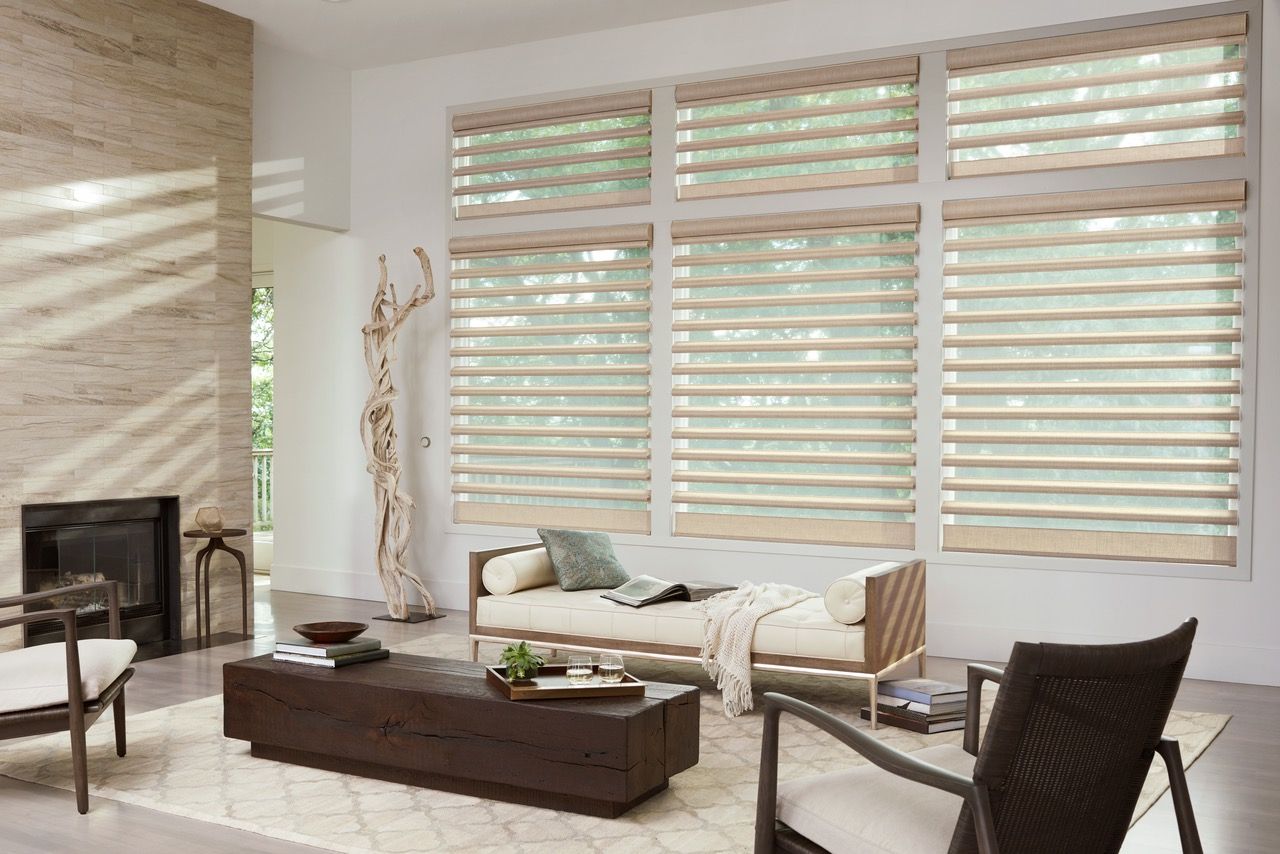
Hunter Douglas’s PowerView Automation platform bundles the motor, battery pack (or hardwire option), and wireless hub into a single ecosystem managed by one app. For Grand Rapids homeowners who don’t have a pre-wired smart system, this is a significant advantage — you’re not dependent on a separate smart-home controller. The Duette Honeycomb shades, in particular, are engineered to trap air in individual cells, creating a thermal barrier that meaningfully reduces heat loss through cold glass in January and heat gain during humid July afternoons. The fabric selection across the Hunter Douglas catalog is among the broadest in the industry, which matters enormously for the design-forward interiors common in Cascade Township luxury builds.
Lutron: The Case for Whole-Home Integration
If your home along the Cascade Road Corridor was pre-wired for a Lutron system — or if you already run a Control4, Savant, or Apple HomeKit environment — adding Lutron motorized shades is a seamless extension of what you already own. Lutron’s RadioRA 3 is a professional-grade platform designed for exactly this scenario: whole-home lighting and shade control managed from a single interface, with the kind of scene-setting capability that lets you schedule shades to close automatically during peak solar hours, reducing the load on your HVAC system and your Consumers Energy usage simultaneously. Lutron keypads also carry a tactile, architectural quality that fits the white-glove aesthetic many Kentwood and Cascade Township homeowners expect.
A practical rule of thumb: If your primary goal is beautiful, insulating window coverage with minimal tech complexity, start with Hunter Douglas. If your primary goal is unified whole-home automation and your home supports it, Lutron is the more powerful platform. Many high-end Grand Rapids homes ultimately use both — Hunter Douglas fabrics on Lutron motors.
Energy Efficiency Considerations for Consumers Energy Customers
Consumers Energy periodically offers rebates and programs for energy-efficient home improvements. Always verify current program eligibility directly with Consumers Energy before your purchase — program availability, qualifying products, and rebate amounts change and are not guaranteed. What you can count on regardless of rebate status is the underlying physics: well-chosen insulating shades reduce the thermal exchange through your windows, which is your home’s single largest surface area for heat loss in a Grand Rapids winter.
Step 3 — Install: What Cascade Township and Kentwood Homeowners Should Expect
Professional installation is not optional for motorized smart shades — it’s the step that determines whether your system performs reliably for years or becomes a source of frustration. Made in the Shade Southeast Grand Rapids handles the full process: precise in-home measurement, professional mounting, hub configuration, and app setup so your shades are fully operational before the installer leaves your home.
The Measurement Appointment
Every window in your home is slightly different. Professional measurement accounts for inside mount depth, header space, wall obstructions, and the specific fabric’s stacking clearance — details that matter especially in the tall, modern window configurations common in new Cascade Township construction. Getting this step right means your shades hang plumb, operate smoothly, and look intentional rather than afterthought.
Hardwired vs. Battery-Powered Motors
For new construction in Kentwood and Cascade Township where electricians can rough in power at the headrail, hardwired motors eliminate the need to ever change or recharge a battery. For existing homes — especially craftsman and mid-century builds in the broader Grand Rapids metro — battery-powered motors offer a clean retrofit with no drywall work. Both Hunter Douglas and Lutron-compatible solutions are available in both configurations. Your installer can advise which is appropriate based on your specific windows and construction access.
- Hardwired motors: Best for new construction or major renovation; permanent and maintenance-light
- Battery-powered motors: Best for retrofit installations; no electrical rough-in required
- RF/wireless control: Both brands offer reliable wireless operation — Lutron’s Clear Connect RF technology in particular is designed for large-scale residential use
- Hub requirements: Hunter Douglas PowerView Gen 3 hub and Lutron Smart Bridge or RadioRA 3 processor are both required for full app and voice control
Step 4 — Maintain: Keeping Your Smart Shades Performing Year-Round
Smart shades are relatively low-maintenance, but a few seasonal habits will keep them operating at their best across Grand Rapids’ full weather range — from ice storms in February to the humid heat spikes of late July.
Seasonal Adjustments
One of the underused features of both Hunter Douglas PowerView and Lutron systems is scheduled scene programming. In winter, you can program your shades to open on south-facing windows during daylight hours to capture passive solar gain — a meaningful supplement to your HVAC system — then close automatically at sunset to retain that heat. In summer, a mid-morning close on west-facing windows prevents the peak afternoon solar load that drives up your Consumers Energy air-conditioning usage. Set these scenes once in the app and they run automatically throughout the season.
Fabric Care in a Humid Climate
Grand Rapids summers bring real humidity, which can affect fabric over time if shades are left closed against damp glass. Manufacturer-backed care guidelines for both Hunter Douglas and Lutron-paired fabrics recommend occasional gentle dusting with a soft brush or compressed air on cellular shades, and following the specific brand’s cleaning instructions for roller or sheer fabrics. Avoid harsh chemical cleaners. For motorized components, periodic battery checks (for battery-powered units) and software updates through the respective apps keep the electronics current and reliable.
- Dust cellular shades every few months with a soft brush or low-pressure air
- Check and replace batteries in battery-powered motors annually or per the app’s low-battery notification
- Update firmware through the PowerView or Lutron app when prompted
- Re-calibrate shade limits if a motor is replaced or a shade is re-hung
- Contact your local installer — Made in the Shade Southeast Grand Rapids — for mechanical issues rather than attempting motor disassembly yourself
Getting Local Support When You Need It
Both Hunter Douglas and Lutron back their products with manufacturer warranties — verify current terms directly with each brand, as coverage details change. What matters locally is having an experienced installer who knows your system and can respond when something needs attention. Made in the Shade Southeast Grand Rapids serves the full Southeast Grand Rapids metro, including Cascade Township and Kentwood, with professional measurement, installation, and ongoing service. Call (616) 691-6643 to schedule your free in-home smart shade demonstration — you can see Hunter Douglas and Lutron side by side in your own home before you commit to either system.
Ready to see both systems in person? Book your free smart shade demo with Made in the Shade Southeast Grand Rapids today. There’s no better way to make this decision than seeing the fabrics, controls, and integration options in the actual light conditions of your home. Call (616) 691-6643 or reach out online to schedule your appointment.
Frequently Asked Questions
Can I mix Hunter Douglas shades with a Lutron smart-home system already installed in my Cascade Township home?
Yes — Hunter Douglas fabrics can be specified on Lutron-compatible motors, giving you the Hunter Douglas fabric library paired with Lutron’s whole-home control platform. This requires careful specification at the ordering stage to confirm motor and fabric compatibility. A professional installer familiar with both systems can verify the correct pairing before you order.
How do I find out if Consumers Energy offers rebates for motorized insulating shades?
Consumers Energy periodically updates its energy-efficiency rebate programs, and qualifying products and rebate amounts change over time. The most reliable approach is to contact Consumers Energy directly or visit their official website to review current program eligibility before making a purchase. Your installer cannot guarantee rebate availability, but can provide product documentation that may be required for any rebate application.
What is the difference between Lutron Caseta and Lutron RadioRA 3 for whole-home shade control?
Lutron Caseta is a more accessible entry-level platform suited for smaller installations — typically individual rooms or modest homes. Lutron RadioRA 3 is a professional-grade system designed for whole-home integration across many devices simultaneously, with greater network capacity and deeper integration with platforms like Control4 and Savant. New construction luxury homes in the Cascade Road Corridor that were pre-wired for smart systems typically benefit more from RadioRA 3, while a single-room retrofit in an older Kentwood home may be well-served by Caseta.
Do battery-powered motorized shades work reliably in Grand Rapids winters?
Yes, battery-powered motors from both Hunter Douglas and Lutron-compatible lines are designed to operate across a wide temperature range and are installed inside the conditioned envelope of your home — meaning they are not exposed to outdoor temperatures. Battery life varies by motor type, shade size, and frequency of use. Both Hunter Douglas PowerView and Lutron apps include low-battery alerts so you can replace batteries before a motor stops responding. For very large or frequently cycled shades, hardwired motors eliminate battery management entirely.